
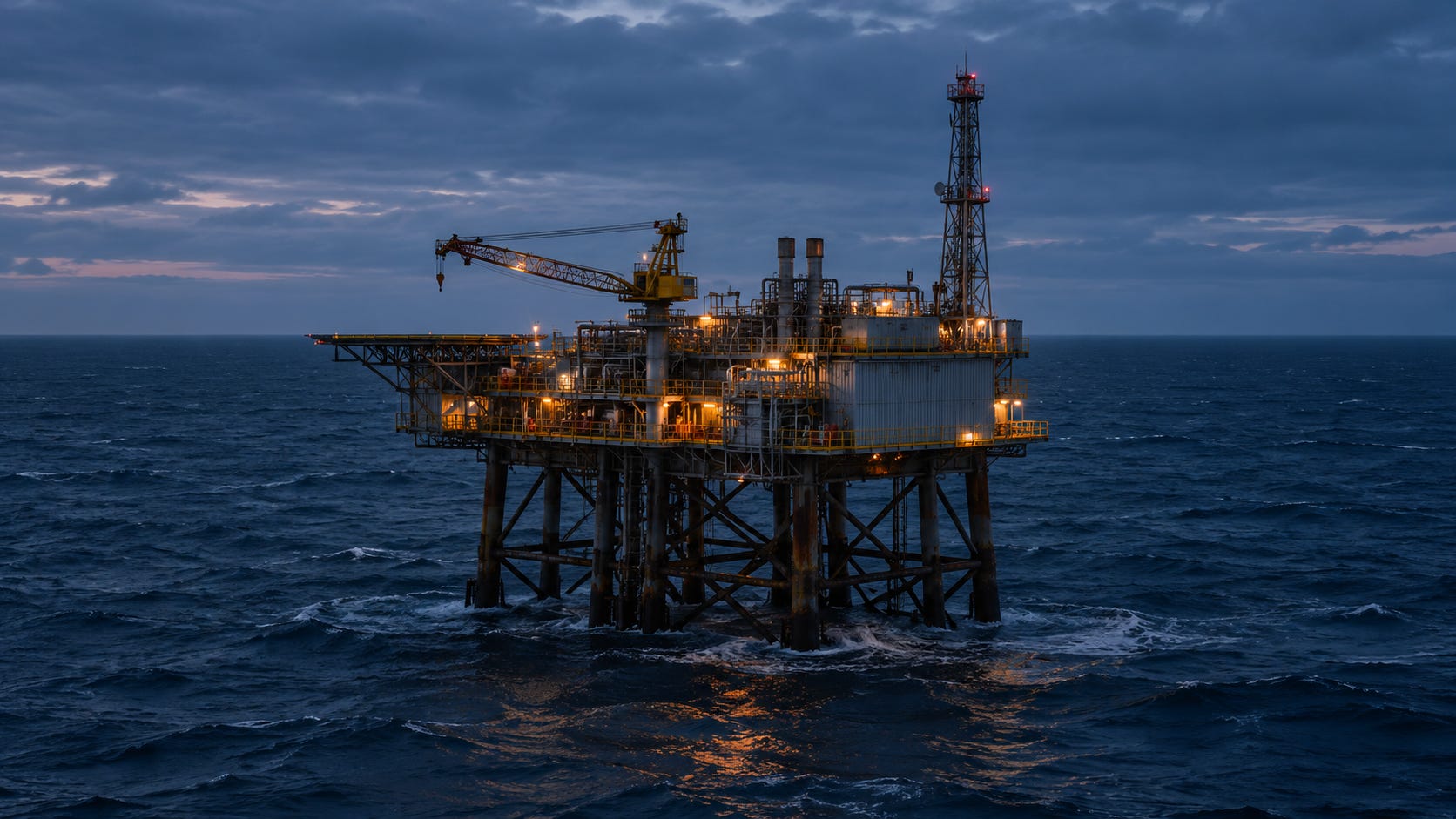
At around 4:35 p.m. London time on Friday 18 December, index funds will be buying Serica (LSE: SER) in the closing auction. If the company joins the FTSE 250, I estimate trackers will need about 11 million shares in total. That’s six to nine normal days of trading. Some will get there before the auction does. London Stock Exchange auction timetable.
I was looking at Serica before any of this, because it looked cheap and I like UK gas. At 227p I’m happy to own it for the fields alone. I’d hold it after December because I think European buyers will have to pay more for gas.
Disclosure. I own Serica shares (LSE: SER).
What the move to the Main Market did to the shares
Serica moved from AIM to the Main Market on 27 October and closed its first day at 270.6p. Seven sessions later it was at 227p, 16% lower. Main Market admission · Price history.
Part of that was the commodity tape. Brent fell from $113.88 on 27 October to $92.57 on 9 November on hopes of a deal with Iran, and UK gas lost more than 15% in the first week of November. Any North Sea producer was going to give ground in that. Brent on 27 October · Brent on 9 November · UK gas.
The rest looks like forced selling. AIM inheritance tax portfolios own their shares for Business Relief, and a Main Market listing takes the relief away, so those managers had to sell whatever the price. The worst day, 4 November, came with no company news and took 6.5% off the shares. Osborne Clarke on IHT funds and Main Market moves.
What caught my attention is what happened next. Since 5 November Serica has closed between 224p and 229p for six sessions while Brent kept falling and UK gas hit its lowest level in a month. On 10 November, the day after Brent dropped almost 6%, 3.1m shares traded, the price touched 218p and it still closed at 224p. I read that as the forced selling running out. I can’t tell you how much is left, though: IHT managers don’t publish their positions, and no shareholder has notified a change in holding since the move. UK gas on 10 November · Serica announcements.
The next five weeks are why I’d call this a trade as well as an investment:
19 November: the 6p interim dividend, about £24m, is paid to holders on the register on 23 October. Interim results.
24 November: FTSE publishes its indicative list for the December review.
Around the end of November: Triton restarts. Serica says that takes output from just over 40,000 to about 65,000 barrels of oil equivalent a day. In the second quarter Triton alone gave Serica 20,300. Trading update.
2 December: FTSE confirms the changes.
18 December: the closing auction I described at the top.
If Serica makes the FTSE 250, it’ll have gone from forced sellers to forced buyers in about seven weeks.
What I’d pay for the fields
I get 281p a share on the November commodity curve after paying for drilling, tax and decommissioning. That’s about 24% above 227p. A 24% discount is real, but only if Triton stays up.
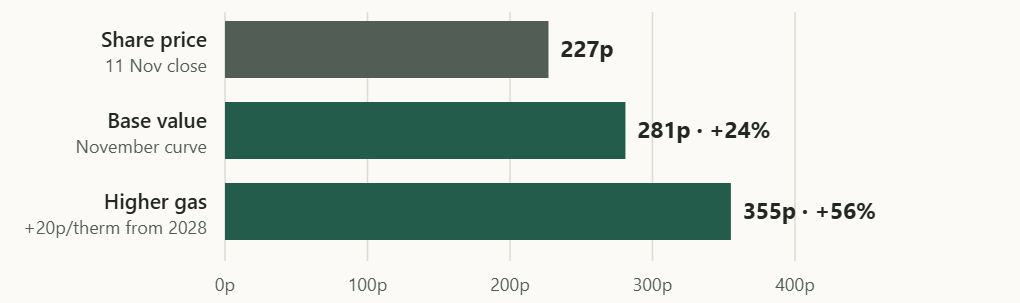
Share price on 11 November against my valuation per share, in pence. Both valuations are mine and rest on the assumptions in the method notes at the end. Serica’s 11 November close.
Triton has been offline since late July, and an engine replacement pushed the restart back. Serica has also hired a rig for six wells, starting at Bruce next year. Management thinks the company can sustain more than 50,000 barrels of oil equivalent a day into 2030. If Triton keeps failing or Bruce slips, my 281p comes down. Operating update.
Why I think gas forwards can rise
Europe went into winter with storage 72% full, against 89% normally for the same date. Even after an ordinary winter, European buyers would have more gas to find next summer if they want their usual buffer back. They’ll compete with the UK for LNG, and they can also buy gas through the interconnectors. Summer 2027 forwards are the first thing to check. Storage figures for 10 November · National Gas on the interconnectors.
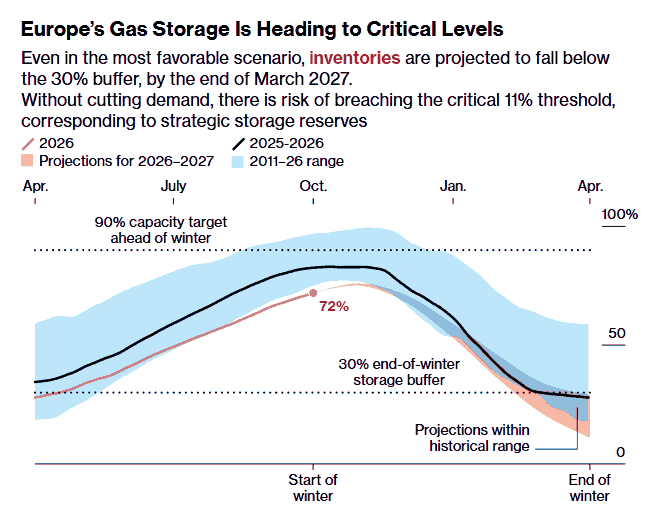
European gas storage, share of capacity full, 10 November.
The November curve already assumed expensive gas in 2027 and much cheaper gas thereafter. I think buyers could be paying up for longer. If UK gas averages 20p a therm higher from 2028 than on that curve, I get 355p a share on the same valuation, about 56% above 227p. I’d revisit that case after a mild winter if Europe can refill without bidding prices up. UK forward gas prices.
If Westminster cuts the tax
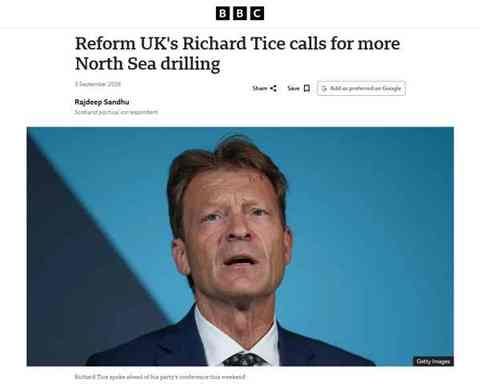
Richard Tice called for more North Sea drilling in September. The industry has separately asked the Treasury to replace the windfall levy three years early. BBC News · The Guardian.
I give Parliament about a one-in-three chance of enacting meaningful tax relief by the end of 2029. Reform UK and the Conservatives both want to repeal the levy. Labour kept the timetable in the Budget. I’m counting a change in policy here. The levy can also end early under the existing price rules. Reform UK · Conservative policy · October Budget.
If Parliament brought the replacement levy forward to January 2029, I’d add about 40p a share to my base valuation from the cash Serica would save. I give tax relief and a lasting sector rerating together about a one-in-four chance. I can make the case for owning Serica while Westminster leaves the rules alone.
Conclusion
At 227p, I’m willing to take the risk that Triton has another bad quarter. If Triton can’t run long enough to pay for the next round of drilling, I’m wrong. Serica’s last two declared dividends totalled 16p a share, about 7% at 227p. What matters for the next dividend is the cash left after drilling. Serica’s interim results and dividend.
I can see myself owning Serica for several years. Larger operators are looking overseas. Serica paid Spirit £33m at completion for a portfolio of gas assets, and Spirit kept most of the expected decommissioning liabilities. Management should do more deals like that one. After the December close, I’ll be watching what Serica does with its cash. Financial Times on North Sea investment · Spirit transaction.
Method notes
How I estimated tracker demand
My central estimate is 11.4m shares, or about £26m at 227p. I get roughly £22m from identifiable FTSE 250 and broad UK trackers and allow another £4m for mandates I can’t see. My range is 8–17m shares. This is gross demand, before allowing for existing holdings or netting. FTSE review calendar.
How I calculated the NAV
I discount cash flow at 10%. I forecast through 2031, including Bruce and part of the wider drilling programme. In 2028, I use average production of 54,000 barrels of oil equivalent a day and estimate £208m of free cash flow to equity after tax, financing, capital spending and decommissioning. I then allow for about 24 million barrels of oil equivalent through 2036 from the remaining published reserves. I assume an £11 cash margin per barrel of oil equivalent in those later years after tax and reinvestment, before decommissioning. I assume 40% tax relief on the remaining decommissioning spend. Rig filing · November presentation.
At year-end 2026, I value the cash flow through 2031 at £1.19bn and the remaining production at £141m. I subtract £108m for remaining decommissioning and £99m for projected net debt and deal payments. I discount the result to November and divide by 393.6m shares. I keep the windfall levy through March 2030 and apply its planned replacement thereafter. In the higher gas case, I keep the production and spending assumptions and recalculate hedges and taxes at the higher price. Reserves · Interim accounts · Spirit liabilities · Share count.
For the tax example, I bring the switch to the Oil and Gas Revenue Levy forward to January 2029. At my base commodity prices, the replacement levy adds no charge in the affected period. The discounted saving is about £155m, or 40p per share. HMRC’s explanation of the replacement levy.Richard Tice called for more North Sea drilling in September. The industry has separately asked the Treasury to replace the windfall levy three years early. BBC News · The Guardian.